
Blogs & News
January 30, 2026
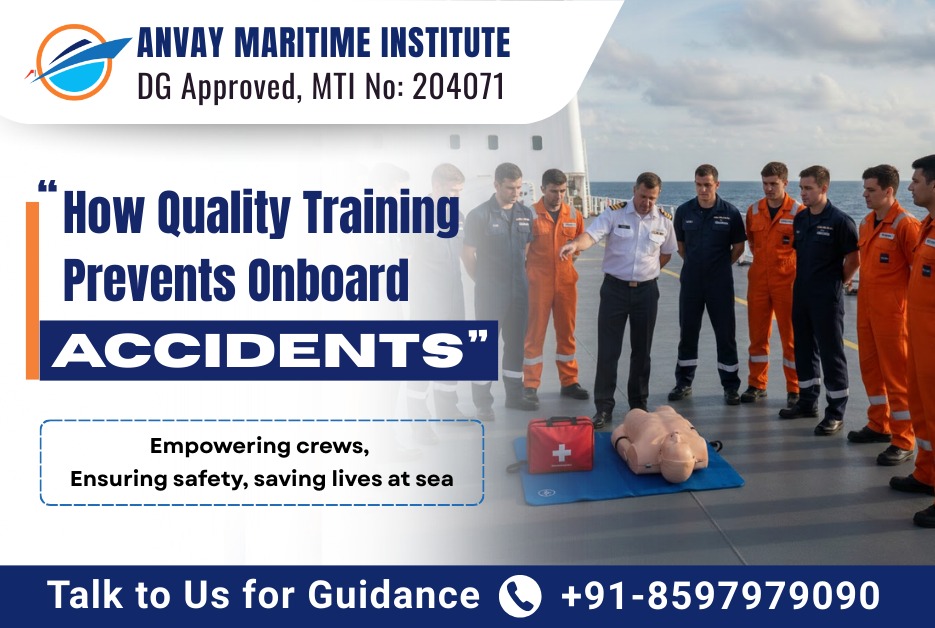
Accidents at sea are rarely caused by equipment failure alone. In most cases, investigations point to human error, lack of training, poor situational awareness, and non-compliance with safety procedures as the primary reasons behind onboard incidents. This is why quality maritime training, especially STCW and DG Shipping–approved training, plays a critical role in reducing shipboard accidents.
With increasing scrutiny from flag states, Port State Control, and shipping companies, seafarers today are expected to demonstrate not just certification, but competence backed by proper training. This blog explains how quality maritime training reduces onboard accidents, why STCW-compliant courses are mandatory, and how choosing the right training institute directly impacts safety at sea.
Understanding Onboard Accidents in the Maritime Industry
Onboard accidents include:
-
Fire and explosion incidents
-
Slips, trips, and falls
-
Lifeboat and mooring accidents
-
Cargo handling injuries
-
Chemical and oil exposure
-
Confined space incidents
According to maritime safety reports, a significant percentage of these incidents are preventable with proper safety training and awareness.
onboard accidents, shipboard safety, maritime accident prevention, seafarer safety training
What Is STCW Training and Why Is It Mandatory?
The STCW Convention (Standards of Training, Certification and Watchkeeping) sets international standards for seafarer training and safety. In India, these courses are regulated and approved by the Directorate General of Shipping (DG Shipping).
Mandatory STCW courses include:
-
PST (Personal Survival Techniques)
-
FPFF (Fire Prevention and Fire Fighting)
-
EFA (Elementary First Aid)
-
PSSR (Personal Safety and Social Responsibilities)
These courses are compulsory for every seafarer, regardless of rank or vessel type.
STCW training, DG Shipping approved courses, mandatory safety training for seafarers
How Quality Training Directly Reduces Shipboard Accidents
1. Improved Emergency Response
Quality STCW training ensures seafarers know:
-
How to react during fire emergencies
-
Proper use of firefighting equipment
-
Correct abandonment procedures
-
Emergency communication protocols
Well-trained crews respond faster and more accurately, significantly reducing damage and injury.
2. Better Fire Prevention and Control
Fire is one of the most dangerous onboard risks. FPFF and AFF training teach:
-
Fire classification
-
Correct extinguisher usage
-
Breathing apparatus handling
-
Team coordination during fire drills
Proper training prevents panic and minimizes escalation during fire incidents.
3. Reduction in Human Error
Most accidents occur due to:
-
Misjudgment
-
Improper procedure
-
Overconfidence
-
Lack of awareness
Quality training reinforces standard operating procedures, reducing mistakes caused by assumptions or shortcuts.
4. Strong Safety Culture Onboard
Training from experienced instructors builds:
-
Discipline
-
Risk awareness
-
Responsibility toward fellow crew
-
Compliance with safety protocols
A strong safety culture drastically reduces routine operational accidents.
5. Proper Use of Safety Equipment
STCW training familiarizes seafarers with:
-
Liferafts and lifejackets
-
Fire hoses and extinguishers
-
Immersion suits
-
Emergency alarms and signals
Incorrect use of safety equipment is a major cause of injury during emergencies.
Role of DG Shipping–Approved Institutes in Accident Prevention
Not all training is equal. DG Shipping–approved maritime institutes are audited for:
-
Qualified faculty
-
Practical training facilities
-
Fire grounds and swimming pools
-
STCW compliance
-
Assessment standards
Training from non-approved institutes often lacks depth, leading to poor onboard performance.
DG Shipping approved institute, best maritime training institute in India, STCW compliant training
Importance of Experienced Maritime Faculty
Experienced instructors (Master Mariners, Chief Engineers, senior officers) bring:
-
Real accident case studies
-
Practical risk management techniques
-
Shipboard discipline and best practices
Their experience helps trainees understand why procedures exist, not just how to follow them.
How Shipping Companies View Training Quality
Shipping companies actively assess:
-
Where a seafarer was trained
-
Practical exposure received
-
Safety attitude during interviews
Crew trained at quality institutes are often preferred because they:
-
Adapt faster onboard
-
Follow procedures correctly
-
Reduce accident-related costs
Long-Term Benefits of Quality Maritime Training
-
Fewer onboard injuries
-
Lower insurance claims
-
Better company reputation
-
Higher employability for seafarers
-
Faster promotions
Quality training is not an expense—it is an investment in safety and career growth.
Conclusion
Most onboard accidents are preventable. The difference between a minor incident and a major casualty often lies in the quality of training a seafarer receives. STCW and DG Shipping–approved training, delivered by experienced maritime faculty, builds competence, confidence, and a strong safety culture.
Choosing a reputed institute like Anvay Maritime Institute, which focuses on practical, compliant, and safety-driven training, directly contributes to reducing onboard accidents and building safer ships worldwide.